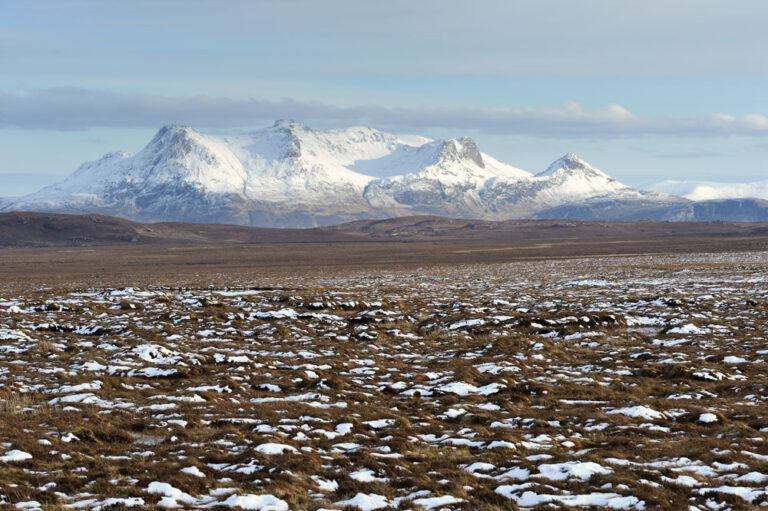

The Flow Country UNESCO World Heritage Site

The Flow Country was inscribed as an UNESCO World Heritage Site in July 2024 – the world’s first peatland World Heritage Site, Scotland’s only World Heritage Site inscribed purely for natural criteria and one of only three natural sites in mainland UK.

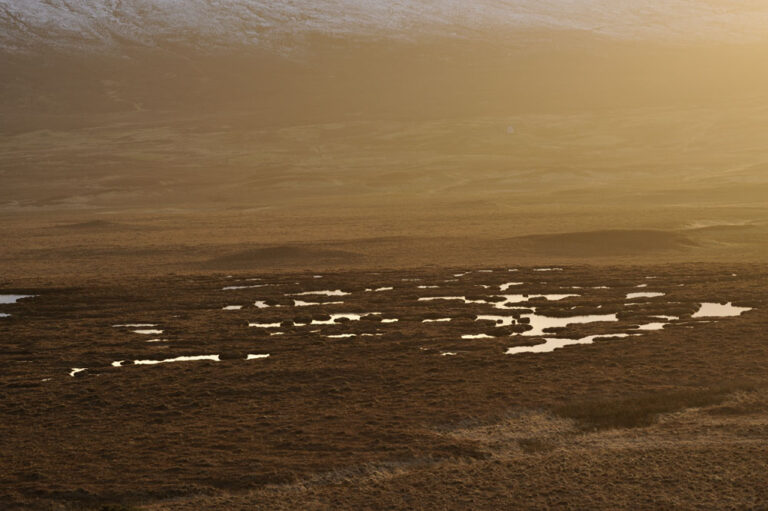
The Flow Country UNESCO World Heritage Site is located in the north of Scotland and is considered the most outstanding example of an actively accumulating blanket bog landscape in the world. This peatland ecosystem, which has been accumulating for the past 9,000 years, consists of a diversity of habitats home to wide variety of life often found nowhere else on earth. Peatlands also play an important role in storing carbon and the site’s ongoing peat-forming ecological processes continue to sequester carbon on a very large scale, representing a significant research and educational resource.
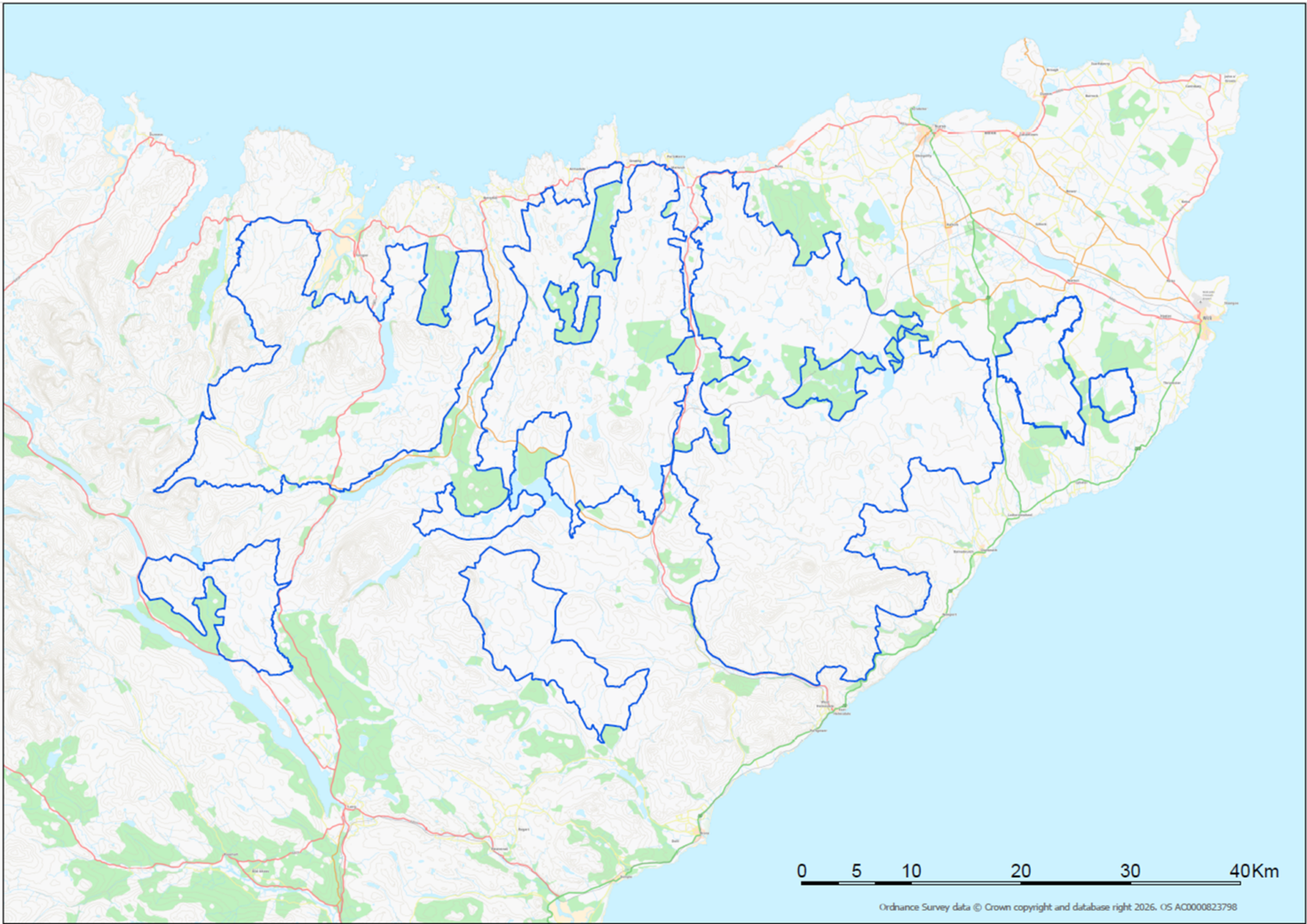
 

World Heritage Site Boundary

The wider Flow Country is an area of blanket bog some 400,000 ha across Caithness and Sutherland. The Flow Country World Heritage Site covers just under half of the full expanse of blanket bog, comprising seven discrete but adjacent areas. The areas within the boundary have been selected for the high quality of the peatland and the continuity of the habitat. A map of the World Heritage Site boundaries can be viewed above.

World Heritage Status

The United Nations Educational, Scientific and Cultural Organisation (UNESCO) recognises World Heritage Sites through the Convention Concerning the Protection of the World Cultural and Natural Heritage (1972), more commonly known as the World Heritage Convention and which has been ratified by 194 member states. World Heritage status is not automatically bestowed on a property by the States Party Government or UNESCO.  All World Heritage Sites must have a clear case for Outstanding Universal Value to be inscribed onto the World Heritage List.

It is the quality and extent of the blanket bog habitat that gives The Flow Country World Heritage Site its Outstanding Universal Value and justifies its place on the World Heritage List. We successfully demonstrated to UNESCO that The Flow Country is the best example of this type of habitat anywhere in the world.

Learn more about the inscribed Outstanding Universal Value and further information on the World Heritage Site at the links below.

The most extensive near continuous example of natural actively accumulating blanket bog ecosystem found globally

The ongoing persistent rain-fed wetness and low rate of evaporation across the Flow Country leads to widespread, year-round waterlogged ground conditions which are ideal for the growth and preservation of peat forming plants.  This ongoing process (paludification) began around 9,000 years ago and is key in the formation of blanket bog.  Unlike other bog types, which are confined by topography, this allows blanket bog to cover entire landscapes.  The Flow Country is one of only a few locations in the world where conditions exist that are conducive to blanket bog formation, and combines a quality, extent and connectivity of this habitat exceeding that of any other known blanket bog.

The climatic and topographic gradients, and geological diversity: bog macroform diversity


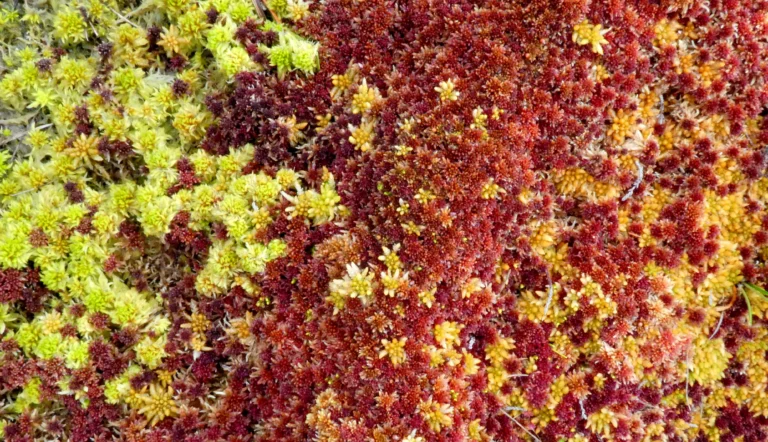
The scale of the site, alongside the gradients in climate and topography, and the diversity of the underlying geology, provide the setting for subtle variations in processes which result in a wide diversity in the character of the blanket bog. These factors control the development of complex systems of hummocks, moss lawns, hollows and pools, and the associated plant species, which produce surface patterning that has been classified into 15 site-types.  No other blanket bog in the world contains, or is reported to contain, such a diverse collection of surface patterning within a single area.

The archive it stores (4th dimension)


Delving deeper, the peat, which has been forming for over 9,000 years, reaches thicknesses of over 8 m, providing an exceptional archive and a 4th dimension to the Flow Country blanket bog.  The processes responsible for the development of the blanket bog system and the ecosystems it supports can be scrutinised back through time across the vast area it covers using pollen records; plant fossils (e.g. hazelnuts, pine cones, pine stumps); lake sediment records (midge and diatom (alga) remains); tephra (ash) layers blown south from Icelandic volcanoes; charcoal (indicating in situ burning).

Its natural laboratory – ongoing scientific and educational use


The exceptional nature of the Flow Country makes it the ‘type site’ for blanket bog study and it continues to be used as a ‘test bed’ for peatland research globally. The diversity of features related to altitudinal and climatic gradients across the region and the depth of archive provides significant scope for research.  Furthermore, the breadth of existing studies provides a fantastic foundation for future research.


Globally peatlands are the largest natural terrestrial carbon store.  Covering only 3% of the world’s land area, they hold nearly 30% of all the carbon stored on land. In blanket bog, year-round waterlogged conditions slow the process of plant decomposition such that the dead plants accumulate to form peat and thereby sequester carbon from the atmosphere. Over thousands of years this plant material builds up and becomes several metres thick creating a valuable carbon store.  The Flow Country provides a superb example of ongoing sequestration, alongside carbon storage demonstrated by peat thicknesses which can reach over 8 metres.